








Chamomile: Benefits, Taste, Caffeine, and How to Steep It
Chamomile is a small daisy-like flower whose dried blossoms make the world's favorite bedtime tea. It tastes soft, floral and lightly sweet with a hint of apple, and it is naturally caffeine-free.

Meet the ingredient
What is Chamomile ?
Chamomile is a small, daisy-like flower in the Asteraceae family whose dried blossoms make one of the most popular herbal teas in the world. The tea most of us know is German chamomile (Matricaria chamomilla), though Roman chamomile (Chamaemelum nobile) is used the same way. Both have white petals around a golden center and a sweet, apple-like scent, which is where the name comes from: the Greek chamaimelon means ground apple.
Chamomile tea is made by steeping the whole dried flower heads in hot water. The cup is pale gold, soft and floral with a natural honeyed sweetness, and it contains no caffeine. It has been sipped for relaxation, sleep and an upset stomach for at least two thousand years, and it is still the herbal tea people reach for first when they want to wind down.
- OriginEurope & Western Asia
- FlavorFloral & Sweet, with apple notes
- CaffeineNone
Botanical origins
The Chamomile family tree
Chamomile belongs to the Asteraceae family, the daisy family, which also includes calendula, echinacea, dandelion and sunflowers. German chamomile, Matricaria chamomilla, is an annual that grows to about two feet, with feathery leaves and hundreds of small flowers. Native to Europe and western Asia, it now grows across North America and is farmed for tea in Egypt, Germany and Eastern Europe.
The genus name Matricaria comes from the Latin matrix, meaning womb, a nod to the plant's long use for women's health. The other chamomile, Roman chamomile, is a low, creeping perennial in the genus Chamaemelum. It is a little more bitter in the cup, which is why German chamomile fills most tea bags. The flowers owe their calming reputation to a group of compounds that includes apigenin, bisabolol and chamazulene, the last of which turns the essential oil a deep blue.

Health benefits
Chamomile tea benefits
Is chamomile tea good for you? It is one of the most studied herbal teas there is, and most of what it is famous for comes down to a few gentle, well-documented effects.
Tap a card to read more.
-
Chamomile is the best-known herbal sleep aid for good reason. It contains apigenin, a compound that binds to the same calming receptors in the brain that some sleep medicines target, only gently. Studies of people drinking chamomile tea nightly report falling asleep a little faster and waking less. A cup thirty to sixty minutes before bed is the traditional dose.
-
The same apigenin that helps with sleep has a mild soothing effect during the day. Clinical trials in people with everyday anxiety have found modest improvements from chamomile taken regularly, and many drinkers simply find that the warmth and the apple-blossom scent settle them.
-
Chamomile has long been a stomach herb. Its compounds relax the smooth muscle of the gut, which can ease cramps, gas and the general unease of an over-full evening. It was a nursery remedy for colic for centuries, and it remains a favorite after-dinner tea for the same reason.
-
Chamomile's essential oil is rich in chamazulene and bisabolol, two compounds with anti-inflammatory activity in lab and animal studies. That is the basis for its traditional use for sore muscles, achy joints and irritated skin, and it is why chamomile turns up in so many creams and compresses.
-
Chamomile has mild antimicrobial properties and, more importantly, it is a soothing hot drink when you feel rough. Sipped slowly or inhaled as steam, it eases a scratchy throat and helps you rest, which is most of what a cold needs.
-
The anti-inflammatory compounds that calm the gut also calm the skin. Cooled chamomile tea has been used for generations as a compress for redness, minor irritation and puffy eyes, and chamomile extracts are a staple in gentle skincare for the same reason.
*These statements have not been evaluated by the Food and Drug Administration. This product is not intended to diagnose, treat, cure, or prevent any disease.
History
History of Chamomile
Chamomile is one of the oldest medicinal herbs on record. The ancient Egyptians dedicated it to the sun god Ra and used it to treat fevers, and the Greeks and Romans drank it, bathed in it and flavored drinks with it. In the Anglo-Saxon world it was one of the nine sacred herbs, called maythen. Medieval households strewed it across floors so that footsteps released its apple scent, and monastery gardens grew it as a standard remedy for sleeplessness and stomach troubles. Today chamomile is the best-selling herbal tea in much of the world, grown on a large scale in Egypt and Europe and steeped nightly in kitchens everywhere.
- Herbal tea Caffeine free
- White tea Low caffeine
- Green tea Low caffeine
- Black tea Medium caffeine
- Matcha High caffeine
Levels are typical; steep time and leaf amount change them.
Caffeine
Does chamomile tea have caffeine?
No. Chamomile tea is naturally caffeine-free. It is brewed from a flower, not from the tea plant, so there is no caffeine in it at all, and a cup an hour before bed will not keep you up. That is exactly why chamomile became the world's bedtime tea: it delivers the warmth and ritual of a hot cup with nothing that works against sleep.
Taste
What does chamomile tea taste like?
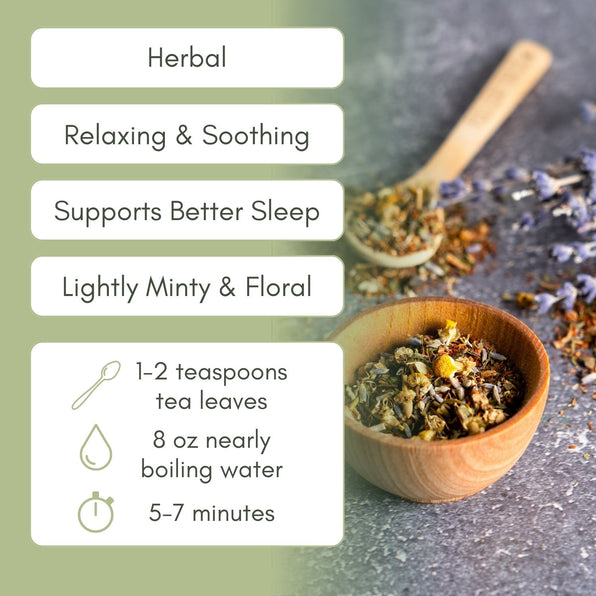
Chamomile tea tastes soft, floral and lightly sweet, with a gentle apple note that gives the flower its name. The body is light and silky, the color a clear gold, and the finish is clean with a faint honeyed warmth. Steep it too long and a mild bitterness creeps in, so five to seven minutes is the sweet spot. Chamomile takes beautifully to a spoon of honey, and it blends well with lavender, mint or lemon balm for a bedtime cup.

Tap a note to explore it

Making the tea
How to make chamomile tea
Heat
Bring fresh, filtered water to a boil and let it rest for a minute. Just off the boil is ideal for flowers.
- Heat
- Measure
- Steep
- Remove
- Enjoy
Where to buy
Where can I buy Organic Chamomile ?
You can find Organic Chamomile on our website! We are USDA certified organic, and our products are vegan and free of GMOs. Try it out today!
Keep exploring


